

Award-Winning Journalist Tonya Fitzpatrick Offers Five Ways Destinations Can Respond to Overtourism
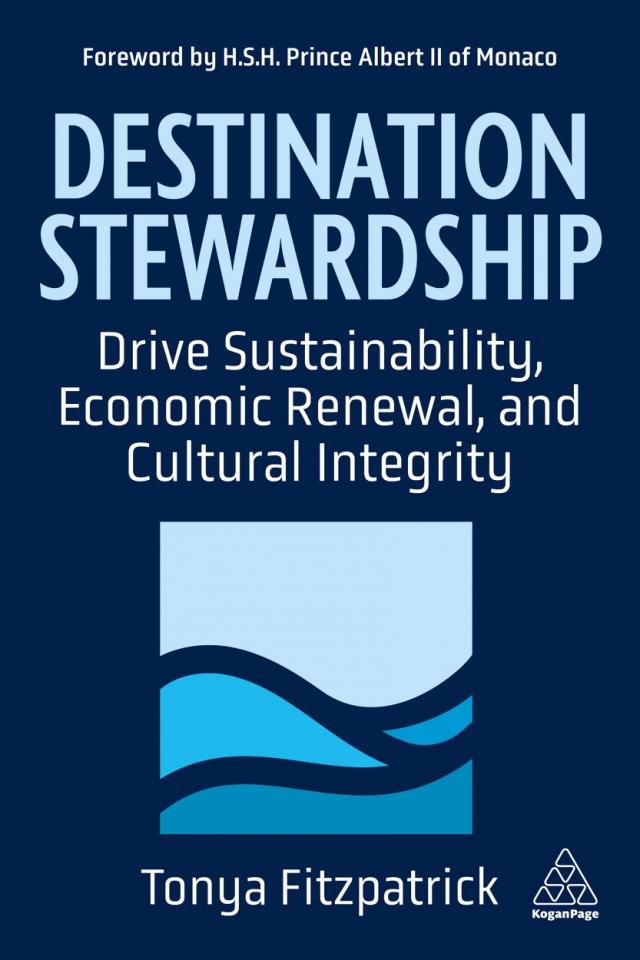
Destination Stewardship: Drive Sustainability, Economic Renewal, and Cultural Integrity by Tonya Fitzpatrick, published by Kogan Page in April 2026.

Tonya Fitzpatrick, author of Destination Stewardship, following a Fox 5 DC television appearance.
Destination stewardship expert says tourism should improve life for residents, protect local culture and leave communities stronger
Tonya Fitzpatrick, author of Destination Stewardship: Drive Sustainability, Economic Renewal, and Cultural Integrity (Kogan Page, April 2026), says the answer is not to stop people from traveling. It is to manage tourism with greater care so that residents share in its benefits and retain a meaningful voice in the future of the places they call home.
“People should be able to welcome visitors without feeling that they are losing their own community,” Fitzpatrick said. “Tourism can create jobs and opportunity, but those benefits should be visible in residents’ daily lives. If a destination becomes harder to live in, something is out of balance.”
That concern reaches well beyond destinations that regularly make headlines for overtourism. OECD Tourism Trends and Policies 2026 reports that concentrated visitor flows are putting pressure on infrastructure and communities in some destinations. The report also describes a broader shift in tourism policy toward balanced economic, social and environmental outcomes, stronger community engagement and more active destination management.
For Fitzpatrick, that shift begins with a simple change in perspective: a destination is not merely a product to market. It is a place where people live, work, raise families, preserve traditions and build businesses. Drawing from the broader framework in her book, she offers five places to begin the conversation without reducing destination stewardship to a checklist.
1. Measure success by resident well-being, not visitor volume alone. Tourism numbers should be considered alongside the experiences of the people who live in the destination.
2. Connect tourism planning to the systems that keep communities livable. Track visitor pressure and coordinate tourism with housing, transportation, infrastructure, public spaces, and conservation.
3. Give residents and cultural custodians a meaningful voice. The people who sustain a place’s identity should help shape decisions about its tourism future.
4. Make the local benefits of tourism visible. Communities should be able to see how visitor spending supports local businesses, workers, cultural institutions and shared priorities.
5. Protect what makes the destination worth visiting. Growth should not erase the culture, character and natural environments that give a place its identity.
Taken together, the five ideas are not a formula for limiting travel. They are an invitation to ask better questions before frustration becomes protest or damage becomes difficult to reverse. Who benefits from tourism, and who carries its costs? Does visitor spending remain in the community? Are residents and cultural custodians being heard? Is tourism protecting local traditions and identity, or gradually displacing them? Will the qualities that drew visitors still exist a decade from now?
Fitzpatrick explores those questions in Destination Stewardship. The book goes beyond broad calls for sustainable tourism by examining the governance, partnerships, measurement systems, funding approaches, and real-world examples needed to put stewardship into practice. It is written for destination organizations, policymakers, tourism businesses, educators, and community leaders, while also speaking to travelers. Its central argument is easy to understand: those who promote, profit from, and participate in tourism all share responsibility for protecting the long-term health and identity of the places tourism depends on.
The Destination Stewardship Center examined the book in an article titled “The First True Book on Destination Stewardship,” written by Jonathan Tourtellot. The book also includes a foreword by H.S.H. Prince Albert II of Monaco, who describes stewardship as a "collaborative practice involving governments, businesses, communities, and travelers."
“Destination stewardship is not anti-tourism, and it is not about closing places to visitors,” Fitzpatrick said. “It is about making sure tourism does not weaken the very place people came to experience. Growth should leave residents with more than crowded streets and higher costs.”
Fitzpatrick is available for media interviews, keynote presentations and panel discussions about overtourism, resident sentiment, visitor management, tourism’s effect on housing and infrastructure, local economic benefits, cultural preservation, climate resilience and the changing responsibilities of destination organizations.
ABOUT DESTINATION STEWARDSHIP
Destination Stewardship: Drive Sustainability, Economic Renewal, and Cultural Integrity, published by Kogan Page in April 2026, is a practical resource for destination organizations, policymakers, tourism businesses, educators, and community leaders. The book examines how tourism can generate economic opportunity without weakening local culture, natural resources, or residents’ quality of life. It has also resonated with travelers, as reflected in five-star reader reviews. It is available through Kogan Page, Amazon, Barnes & Noble, and wherever books are sold.
ABOUT TONYA FITZPATRICK
Tonya Fitzpatrick, Esq., is the author of Destination Stewardship: Drive Sustainability, Economic Renewal, and Cultural Integrity, an award-winning travel journalist, and a three-time TEDx speaker. She is co-founder of World Footprints, a social-impact travel media platform, and serves on the Maryland Tourism Development Board. She has addressed industry audiences including Destinations International and ITB Berlin. Her work explores how tourism can strengthen communities, protect cultural integrity, create lasting economic opportunity, and deepen understanding across cultures.
MEDIA CONTACT
Theresa Personna
Kogan Page
+1 212-812-4414 ext. 702
tpersonna@koganpage.com
Visit us on social media:
LinkedIn
Instagram
YouTube
X
Legal Disclaimer:
EIN Presswire provides this news content "as is" without warranty of any kind. We do not accept any responsibility or liability for the accuracy, content, images, videos, licenses, completeness, legality, or reliability of the information contained in this article. If you have any complaints or copyright issues related to this article, kindly contact the author above.
